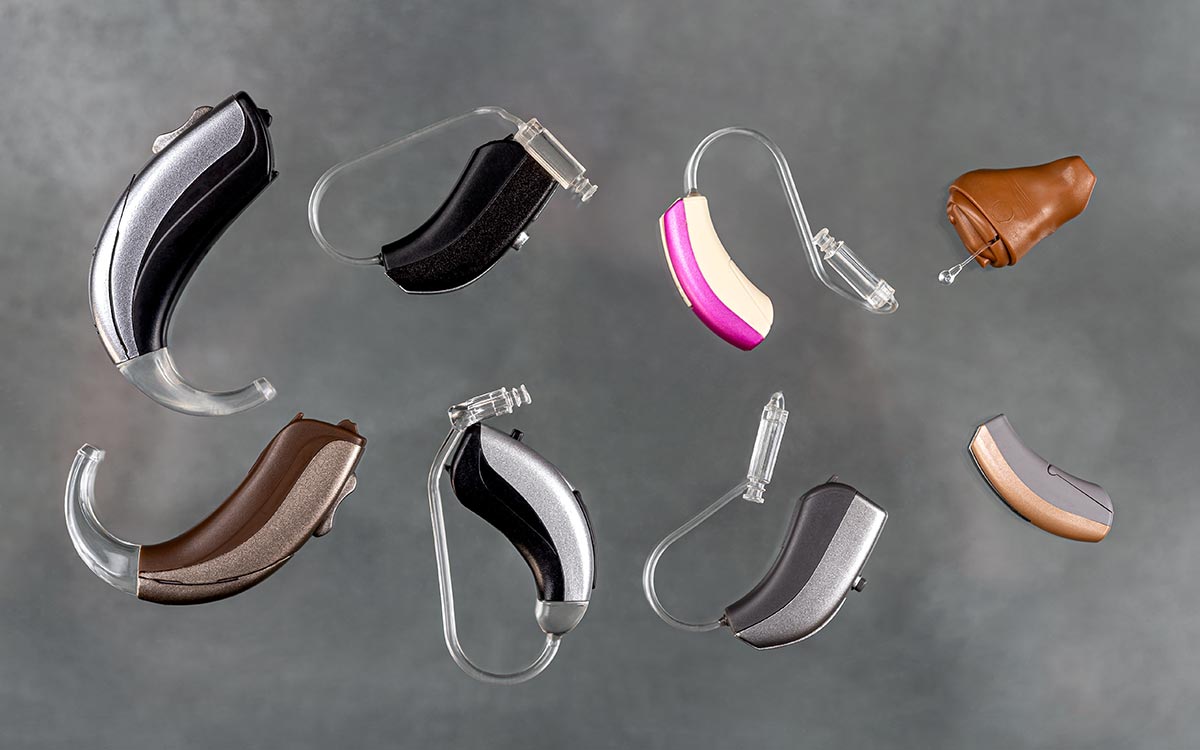
The sheer volume of hearing aid designs and technology levels on the market today can make the selection process feel complicated. However, an expert hearing solution exists for every person’s unique needs and daily habits. It’s just an issue of finding it!
Gaining an accurate understanding of common hearing aid categories will empower you to make an educated decision for your hearing health. Today, we’re breaking down the various hearing aid styles and what makes each one unique.
ITC (In-the-Canal) Hearing Systems
Basic Summary:
ITC hearing aids rest partly in the ear canal, with an inconspicuous portion visible at the outer ear.
Key Selling Points:
- Provides an understated look compared to traditional styles
- Custom-molded for ease
- A useful choice for those with moderate hearing needs
Because they provide both discretion and helpful features, ITC models are an excellent pick for those new to hearing technology.
Exploring IIC (Invisible-in-Canal) Options
Core Traits:
IIC models are the most miniature custom-fitted auditory solutions you can choose. These devices sit so far inside the ear that they are nearly impossible to see.
Primary Incentives:
- Highest level of discretion for the wearer
- Microphone placement helps mimic the ear’s natural sound collection
- So light and small that users often don’t notice they are wearing them
The small form size of IIC models renders them perfect for mild hearing loss and anyone who values a stealthy hearing solution.
Full and Half-Shell ITE Options
Structural Data:
ITE devices are constructed to reside in the outer ear area, offering two different shell sizes based on your anatomy. The shell is uniquely formed to the specific contours of your individual ear.
The Advantages:
- Larger size allows for more features and longer battery life
- Great for individuals who find smaller devices hard to manipulate
- Effective for mild to severe hearing loss
Many patients prefer ITE devices because they provide an integrated, self-contained design that doesn’t hook over the ear.
BTE (Behind-the-Ear) Essentials
Summary:
These devices rest on the outer ridge of the ear’s anatomy. Audio moves into the ear canal through a small tube or custom earmold.
Reasons for Choosing:
- Regarded as one of the most dependable and sturdy designs available
- Useful for almost every level of hearing impairment
- The size provides ample room for the latest connectivity features and rechargeable hardware
For those who value a reliable device that is easy to manage and provides plenty of volume, BTE is a top choice.
Modern RIC Models
Design Specifications:
RIC hearing aids look similar to BTE models, but the speaker (receiver) sits inside the ear canal rather than inside the device behind the ear.
Why people select them:
- Known for creating some of the most realistic audio in the industry
- Users value the slim design and comfortable fit for all-day use
- An adaptable solution that works for various degrees of auditory needs
Thanks to their ease and aesthetic appeal, RIC devices have become a gold standard.
Extended-Wear Hearing Aids
What they are:
An audiologist places these specialized hearing aids deep into the canal, where they stay for multiple weeks.
Why people choose them:
- Provides an effortless journey with no daily maintenance required
- Nearly invisible
- Engineering allows them to stay in the ear during all facets of daily life
Extended-wear devices are ideal for those who want an effortless approach.
Smart Hearing Aids with Bluetooth
What they represent:
These are modern units equipped with radio technology to sync with your personal electronics and televisions.
Digital Benefits:
- Enjoy immediate sound streaming from your phone or TV right into your ears
- Gives you the ability to adjust your volume and programs via an electronic app
- Enhances everyday life by making technology engagement seamless and clear
This wireless technology is located in most modern behind-the-ear and in-the-canal models.
Middle-Ear Implants
Design Layout:
This technology involves an operative procedure to place a device that mechanically stimulates the bones of the middle ear.
Medical Motivations:
- A viable path for patients who are unable to wear standard acoustic devices
- Pleasant option for chronic ear issues related to traditional devices
An exhaustive meeting with a specialist professional is necessary before considering an auditory implant.
Choosing the Right Style for You
There is no one single “best” hearing aid; rather, there is an optimal one for you, determined by your medical needs and personal comfort. An expert can provide the support needed to test out different styles and find the one that fits your life perfectly.
If you’re prepared to explore the possibilities, schedule an auditory evaluation today. It’s a great first step toward better hearing and more confident communication every day.
Sources:
https://www.mayoclinic.org/diseases-conditions/hearing-loss/in-depth/hearing-aids/art-
20044116
https://www.hearinglife.com/hearing-aids/types
https://www.nidcd.nih.gov/health/hearing-aids
